Roger Federer
Born: August 8, 1981 in Basel (DeutschSchweiz)
Height: 1.85 m
Plays: Right-handed
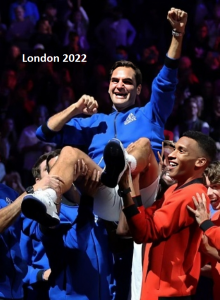
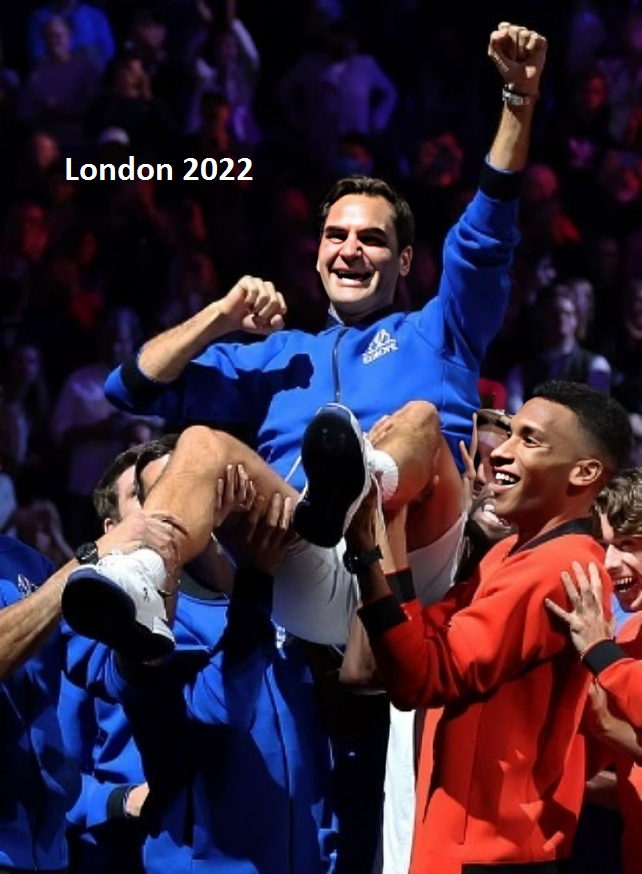
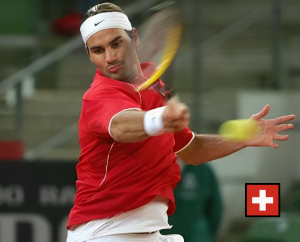 I thought that Covid-19 would finish Federer’s career at the age of 39. He lost in the semifinal at the Australian Open ’20 to Novak Đoković playing poorly; it seemed it would be his last official appearance. Federer left nothing in the tank after the opener, which he lost despite leading 4:1* (40/0). He had defeated John Millman and Tennys Sandgren in amazing five-setters, being on the verge of defeat. Federer made the hearts of his fans beat again, but players of this kind he was usually defeating 3-0 at Slams. A few weeks after Đoković’s semifinal, Federer played (and won) an exhibition match against Rafael Nadal in Cape Town (Federer’s mother comes from South Africa), then came the pandemic and Federer wouldn’t play for six months even if he wanted to. Couldn’t it be a fitting end of his stellar career to play the last two matches against his two arch-rivals? At the end of 2020, Federer and Nadal had won 20 majors each, Đoković had won 17. Perhaps it was a driving force for Federer to make a comeback after a 13-month break to give himself a chance to win the race for the most major titles, which wasn’t pragmatic looking at the age of the biggest contenders for a GOAT nickname: Nadal is five years younger, Đoković six years younger – their styles of play have always been more demanding, but they have also been denying paradigms of tennis longevity. If Federer could realistically think about defeating them, he would theoretically be able to do this only at Wimbledon, as he couldn’t face them earlier than in the quarterfinals thanks to the Covid-related frozen ranking. Federer gave himself a last chance for the glory of a Slam champion; he subordinated the first half of the season to prepare himself for Wimbledon where he raised the trophy the record eight times (2003, 2004, 2005, 2006, 2007, 2009, 2012, 2017), and reached the quarterfinal where instead of the game’s giants he faced Hubert Hurkacz, a player he should have defeated firmly. It turned out that Federer’s body couldn’t bear the load of playing two weeks in the “best of five” format. Federer looked abysmal against the Pole; he lost in straight sets, which turned out to be his last professional match, but officially he confirmed his retirement more than a year later at the Laver Cup ’22 where he decided to play alongside Nadal in doubles – the Spaniard came to London only to share the moment of the last time on court together, which ended in tears of both great champions.
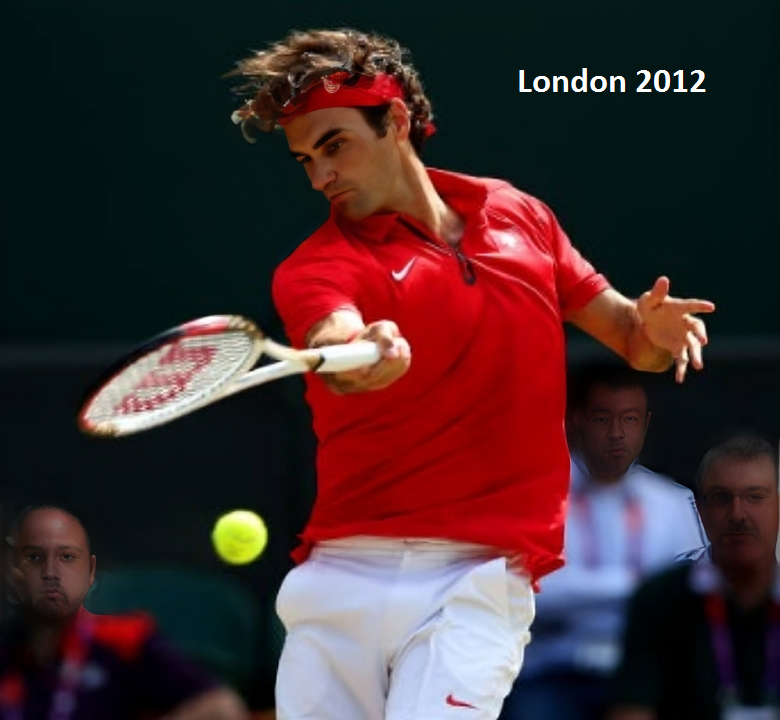
In modern tennis, before Federer, there was only one guy who was able to be competitive in the 40th year of life – Jimmy Connors; it’s tough to compare his times. At the highest level Federer achieved more than Connors approaching 40, as Connors, after turning 32, couldn’t play beyond the semifinals at majors. Meanwhile, in the year 2017, the almost 36-year-old Federer came back from a knee injury after a six-month break and won the Australian Open! That year he also triumphed at Wimbledon; it was a year when Đoković and Andy Murray (the best players of 2016) suffered injuries, and Federer, like many years in the past, was competing with Nadal in the race for the position of the best player of the season. Federer began to play with lower frequency, wisely choosing his events. Wimbledon ’12 meant Federer’s presumably last major title – then came a remarkable achievement five years later, when within five majors he collected another three titles (Australian Open ’18 is the last one). No matter what would happen to the end of the 2020s, Federer has guaranteed a place in history as one of the three greatest players – in the minds of many the greatest, the GOAT – and I understand it given his style of play and friendly personality. Looking back, it was tough to predict how tremendously Federer’s career would develop. It was the year 1998 when Federer played his first ATP tournaments; the number three was special because he faced Andre Agassi in the first round of Basel. Federer was shown on Eurosport for the first time, and journalists had an opportunity to write about the teenager as one of the biggest prospects in tennis (he had won Wimbledon and the Orange Bowl that year). The first full year on the tour (1999) wasn’t easy though. Federer was intertwining flashes of brilliance with annoying nonchalance; in mid-season he suffered an eight-match losing streak. Federer’s peer Lleyton Hewitt drew more attention; in the years 2000-01, one-year-older Marat Safin and Juan Carlos Ferrero were ranked higher. In 2001 Federer defeated at Wimbledon the seven-time champion Pete Sampras in a memorable five-setter; it seemed like a handing over of the baton, but the following year, when Federer was perceived for the first time as a potential Grand Slam champion, he lost in the first round at 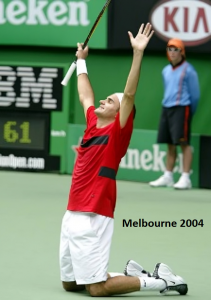 Wimbledon to three-years-younger Mario Ančić in straight sets, in the first match of the Croat on a fully packed main arena. In 2001 Federer claimed his maiden title, in a main-level event No. 48; no other great champion waited so long to raise a trophy. The 20-year-old Federer was happy that the burden dropped off his shoulders, but at his age Björn Borg was already a triple Grand Slam champion, Ivan Lendl had eight Grand Prix titles and had led Czechoslovakia to Davis Cup triumph, while Sampras didn’t need to worry about money anymore, claiming a Grand Slam Cup title (receiving a check for two million dollars, having won his maiden Slam by the way). Saying that Federer would be for the 2000s someone like Borg, Lendl and Sampras in the three previous decades didn’t make sense, but time showed that he would overcome them all, significantly. Federer won his first two really big titles at the age of 22 (Wimbledon, Masters), but in my opinion the key to the astonishing achievements was his performance at the Australian Open ’04 when he advanced to No. 1 for the first time (and didn’t lose this position for more than four years, when Nadal overthrew him after an epic Wimbledon final… 237 consecutive weeks on top – it’s a record; second Connors could keep this position for “only” 160 weeks).
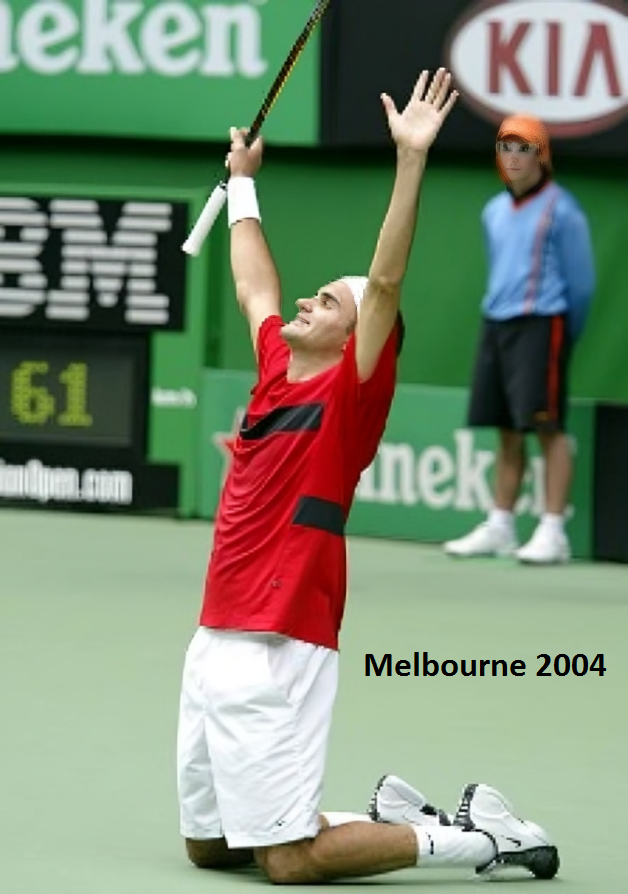
The event in Melbourne ’04 was so important because Federer showed his new face. The end of the 90s and the beginning of the 00s was a time when the serve-and-volley style was still dominant. Federer grew up (just like me) admiring Boris Becker and Stefan Edberg; he stylized his tennis on these two great players, but he didn’t possess Edberg’s finesse at the net or Becker’s power. Federer’s serve was exceptionally good, but not lethal like in Sampras’ case. The young Federer reminded me most of Tim Henman (one of Federer’s toughest rivals in the first few years on tour), the permanent aspirant to the Wimbledon title. Admittedly, Federer had his first Wimbledon crown at the age of ~22, which placed him in an all-time hierarchy over Henman, but at the time I wasn’t convinced that he would win many more, given that the talent of Andy Roddick exploded that year and Ferrero looked like a “king of clay” for the entire decade; moreover Federer’s acquaintance from junior times, David Nalbandian, was playing better and better, defeating Federer in their first five professional meetings. Returning to Federer’s new face in Melbourne – he reinvented himself during the fortnight. From an offensive player who was supposed to play serve-and-volley regularly on grass and carpet indoors, and apply an attacking game on hard courts, Federer turned into an offensive baseliner. He wasn’t particularly interested in frequent attacks to the net, and the effect was thundering: Federer defeated in back-to-back four-setters his toughest opponents of the young generation – Hewitt (H2H 2:7) and Nalbandian (H2H 1:5). Federer rewrote the script because he realized that men’s tennis, under the pressure of prolonging rallies to please TV audiences and on-court spectators, was transforming itself into a primarily baseline game in which those who hit the ball very well off both sides would have more arguments to defeat players who relied more on attacking the net. The Australian Open ’04 catapulted Federer to a new level; the trophy raised in Melbourne was the Holy Grail – Federer became convinced that thinking of himself as another Edberg/Becker was like running into a brick wall. Nonetheless, being inspired by them was priceless; the new Federer simply found the great balance between his defensive and offensive attitude. He could modify his game depending on the situation, attacking the net freely without an obvious pattern. I remember his matches from the mid-00s when he was almost invincible: he could play a few games in a row without being interested in hitting a single volley, and then, all of a sudden, he could apply a few serve-and-volley actions behind the second serve or propose chip-and-charge with his specific backhand slice dropping in the service box (a drop shot in its longer version). Without this adjustment, it is hard to imagine that Federer would have conquered Paris, which once happened (2009), or he would have been able to win five successive times in New York City (2004, 2005, 2006, 2007, 2008). Federer’s new face was brutal for two players in particular: Hewitt and Roddick. It was rather sad watching how these two young, very gifted men were helpless facing a more versatile version of Federer, especially as he was giving them a taste of their own medicine. Against Hewitt, Federer could be glued to the baseline, exchanging shots of different spins, simply showing the Australian that his baseline game was unpredictable and his footwork better – and that was enough, adding a much better serve, to defeat him fifteen times in a row (!). Against Roddick, Federer was serving better than against anyone else because of the specific rhythm of their matches – when your opponent holds easily, you have more energy to serve faster, and that’s what Federer was consistently implementing. He knew how to read Roddick’s serve, and the rock-solid backhand block allowed him to put the ball back onto Roddick’s side more often than other players could; with this methodical approach Federer knew that he should break A-Rod at least once each set – if not, no problem at all, one mini-break in the tie-break should be enough to take the set anyway. Federer defeated the American eleven times in a row (6-0 in tie-breaks in those matches, even though Roddick was usually playing them with authority). Federer created a huge gap between himself and all the most talented players born in the years 1980-82; only Safin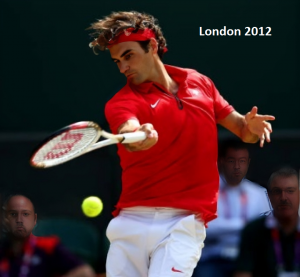 seemed to be a challenging opponent, but once he won his second major title (Australian Open ’05; epic semifinal over Federer) he couldn’t find the required motivation anymore. Already when Federer had won five or six majors, people started to foresee twenty for him, which finally came true, but it’s scary to think how many of the biggest titles Federer could have collected if the two arch-rivals hadn’t stood in his way: Nadal and Đoković. The Spaniard manifested his big hunger for glory in the first meeting against Federer; it happened at Key Biscayne ’04. The Swiss opened the year with a 23-1 record, had won three titles, and then Nadal stunned him 6-3, 6-3… Federer hadn’t lost a match of this type for 1.5 years, when he had been defeated by another left-hander, Franco Squillari, 2-6, 3-6 in Sydney. The first few matches didn’t indicate that Đoković would be a serious threat to Federer’s records. The Swiss won their first four matches, dropping two sets in the process, but his victory wasn’t threatened in any of those matches. Montreal ’07 changed everything in their rivalry; it’s not only that Đoković defeated Federer in the final – he did it in dramatic circumstances, 7-6, 2-6, 7-6 (saving a triple set point on return at 5:6 in the opener). That match set the tone for the rest of their rivalry. The Serb got the edge in tighter moments; actually, it’s ridiculous how many times he defeated Federer when things were balanced for both of them at the end of their matches. Đoković has won all their three matches when a deciding third-set tie-break was required, and all their four five-setters (three of them when Federer was holding match points – US Open 2010 and 2011 as well as Wimbledon 2019, twice on serve, which is absolutely mind-blowing). Actually, the entire 2010s decade was an unprecedented rivalry in tennis history between three main protagonists: Federer, Nadal and Đoković. At the head-to-head level, Federer lost both: 16-24 to Nadal (winning seven of the last eight, though, including a memorable Wimbledon ’19 semifinal) and 23-27 to Đoković. Given the historic perspective, it’s a blow for Federer that he lost to the Serb in regard to “Masters” triumphs, six to seven titles. When Federer triumphed in the event
 for the eight best players in 2011 for the sixth time (overcoming the five of Lendl and Sampras), many would expect it to remain untouched; Đoković had won only one at the time. Yet the Serb began his mad chase in 2012, and ultimately triumphed there on seven occasions, the last time in 2023. Thanks to his amazing form in the early 20s, Đoković overcame Federer in the number of weeks spent at the top of the tennis pyramid (428 vs 310). Regarding the most objective numbers (Grand Slam titles), there is no doubt that Federer is third behind Nadal and Đoković. It is valid to call Federer the greatest grass-court player of the Open Era; at least in this department it’s tough to argue that Đoković’s successes are more impressive, especially when pondering their game styles. I think Federer can be fulfilled with his astonishing career also from the national perspective. Just like Nadal and Đoković, Federer led his country to Davis Cup victory (2014), and like the Spaniard and the Serb, the Swiss got the gold medal at the Olympics – admittedly only in doubles, but his silver in singles is also a reason to be proud, because he fought for it after the longest three-set match in history, which very likely will not be broken since sets with a two-game advantage disappeared from official tournaments regardless of “best of three” or “best of five” formats.
Career record: 1251–275 [ 367 events ]
Career titles: 103
Highest ranking: 1
Best GS results:
Australian Open
(champion 2003; ’06-07, 10, 17-18; runner-up ’09; semifinal ’05, 08, 11-14, 20)
Roland Garros
(champion 2009; runner-up 2006-08 & 11; semifinal ’05 & 19; quarterfinal ’01, 10, 13, 15)
Wimbledon
(champion 2003-07, 09, 12, 17; runner-up ’08, 14-15 & 19; semifinal 16; quarterfinal 01, 10-11, 18 & 21)
US Open
(champion 2004-08; runner-up ’09, 15; semifinal ’10-11, 14; quarterfinal ’12, 17 & 19)
Olympic gold medallist in doubles (2008), silver in singles (2012)
Masters champion 2003-04, 06-07 and 10-11
Davis Cup champion 2014
Hopman Cup champion 2001, 2018 and 2019
Year-end ranking 1997-2021: 700 – 302 – 64 – 29 – 12 – 6 – 2 – 1 – 1 – 1 – 1 – 2 – 1 – 2 – 3 – 2 – 6 – 2 – 3 – 16 – 2 – 3 – 3 – 5 – 16
This entry was posted in
Tournaments. Bookmark the
permalink.




Activity: 1998 – 2021
Five-setters: 33–23 (58%)
Tie-breaks: 469–248 (65%)
Deciding 3rd set TB: 35-25 (58%)
Defeats by retirement: 0
Walkovers given: 5
Longest victory: Aussie Open ’08 (3R)… Janko Tipsarevic 6-7, 7-6, 5-7, 6-1, 10-8… 4 hours 25 minutes
Longest defeat: Rome ’06 (F)… Rafael Nadal 7-6, 6-7, 4-6, 6-2, 6-7… 5 hours 5 minutes
MP matches: 21-24